Agent and identity governance
Govern the keys, service credentials and agents behind AI with identity posture, autonomy control tiers, a lifecycle worklist and revocation-impact checks.
Online version, always current: https://cloudvision360.com/docs/agentvision360/agent-identity-governance/
Beyond spend, AgentVision360 governs the non-human identities that use your AI — API keys, admin keys, service credentials and agents. Each one is scored, given a recommended control tier, tracked through its lifecycle, and checked for impact before anything is revoked.
Identity posture
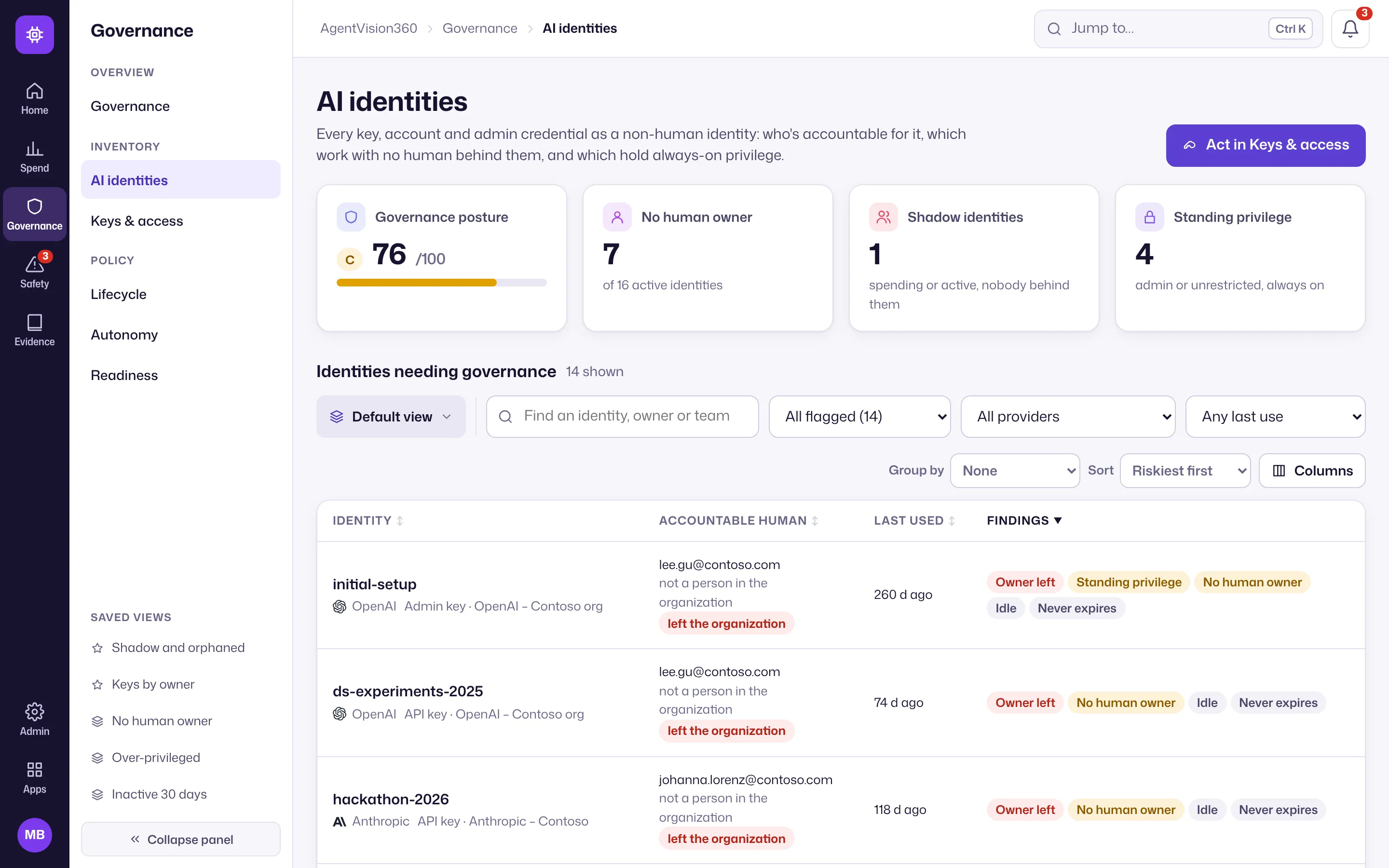
Every live non-human identity is scored as traceable (a real, still-employed owner and a defined scope) or shadow, and flagged for standing privilege (admin or unrestricted keys), no expiry, and whether it has recent use. You get a governance score and grade, posture by provider, and an attention list ranked worst first. Deleted and archived principals are left out — only live identities are governed.
Autonomy control tiers
Each identity gets a recommended control tier for changes to it:
- Restricted — high blast radius or untraceable; changes should be tightly held.
- Approval — changes should go through a second person.
- Standard — low risk; normal handling.
The tier is derived from blast radius, standing privilege and traceability, so you can see at a glance which identities need the most control.
Identity lifecycle
Every identity should have a “birth certificate” — a declared owner, a defined scope, an expiry and evidence of usage. The lifecycle view shows how complete each one is and builds a worklist of identities that are idle, stale, orphaned (owner has left) or due for deprovisioning, so nothing lingers with standing access.
Find them in the Governance hub: Governance (posture and what to do next), AI identities, Keys & access, Lifecycle, Autonomy and Readiness (check a new agent’s design before it goes live).
Revocation impact
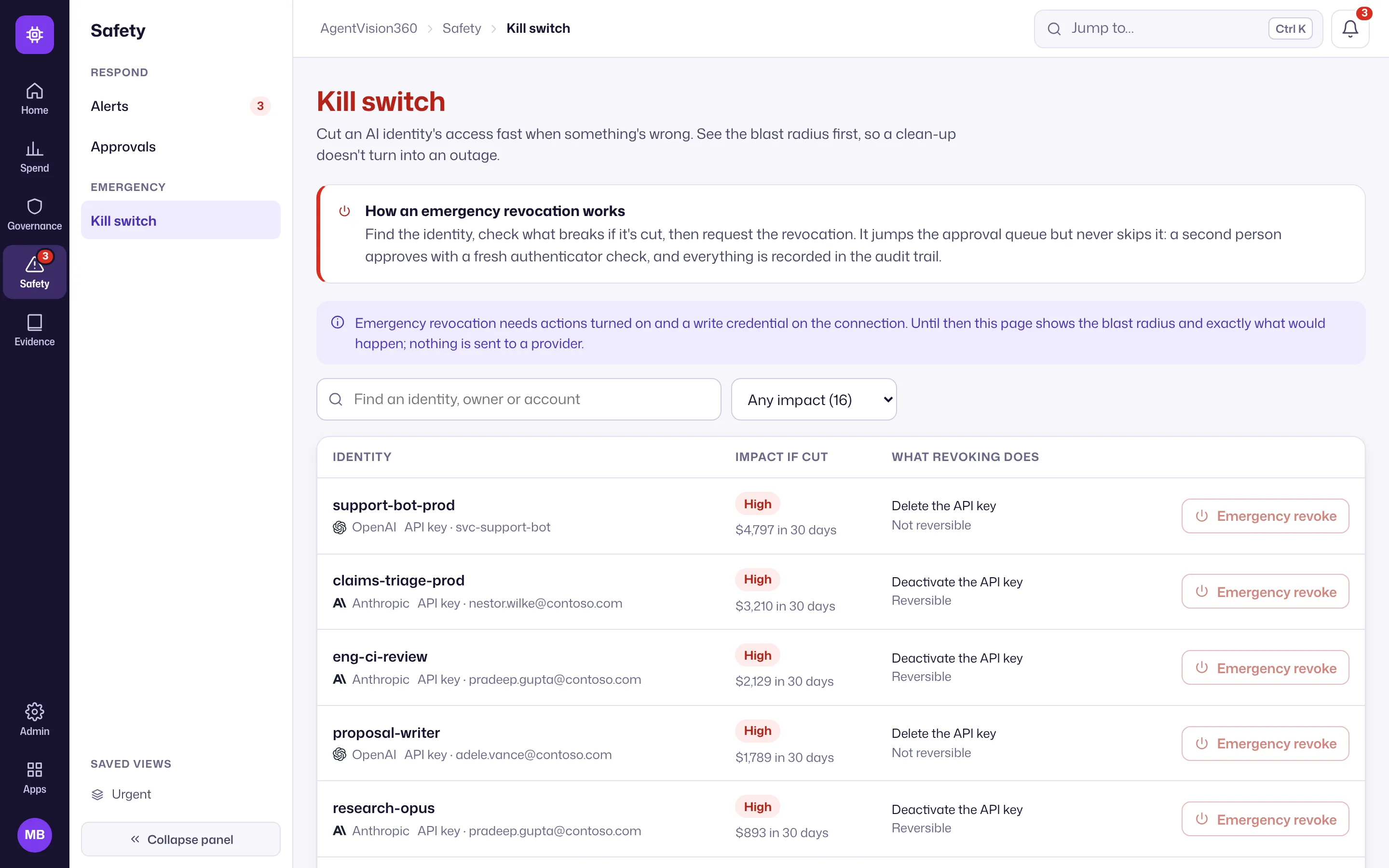
Before a key or seat is revoked with a kill-switch, AgentVision360 shows what it is used for — recent spend, the models and the projects behind it — so revoking it doesn’t silently break a workload. Revocation and other changes are approved actions: off by default, they run only after other people approve, and every one is recorded in the hash-chained audit trail.
Which plan
Identity posture and the governance score are included from Team. Autonomy control tiers, the lifecycle worklist, and approved actions with revocation-impact checks are on Business and above.